Journal
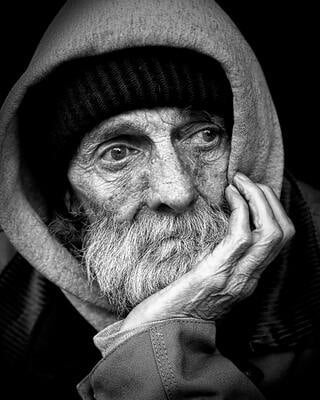
Joseph Campbell was an American professor, writer, and mythologist best known for his work in comparative mythology and comparative religion. His most influential book, The Hero with a Thousand Faces (1949), introduced the concept of the “monomyth” or “The Hero’s Journey,” a narrative structure that appears in myths and stories across cultures and has influenced literature, film, and storytelling, including works like Star Wars. Campbell’s philosophy, often summarized by his famous phrase “Follow your bliss,” encourages individuals to seek their passions and personal fulfillment. His extensive studies of myths, folklore, and religious traditions highlight the universal patterns that shape human storytelling and cultural understanding.
*****************************************************************************************
THE ETERNAL PRINCIPLE WITH JOSEPH CAMPBLL
In the final episode of The Power of Myth, Bill Moyers and mythologist Joseph Campbell discuss commonalities in every culture that create a need for God.
Campbell talks about eternity and the “eternal principle” in this clip.
***********************************************************************************************
The Human Condition in The 21st Century
Thesis and controlling ideas by Sabri Bebawi
Edited and refined by Chat GPT
Last night, a friend and I discussed life and all that life brings. I brought up the term “Human Condition,” and my friend thought I was using the term to excuse people’s behavior or to justify the ils of the world. I explained that I never meant to create such a cause-and-effect relationship. I merely use the term explain as this essay does.
The human condition refers to the characteristics, key events, and situations that define human existence, including birth, growth, emotional experiences, conflict, and mortality. It encompasses the struggles and aspirations of individuals and societies as they navigate the complexities of life. In the 21st century, the human condition is shaped by rapid technological advancements, social and economic disparities, environmental crises, and evolving cultural identities. While humanity continues to make significant progress, challenges such as loneliness, ethical dilemmas, and existential uncertainty persist, shaping how people experience life in the modern world.
One of the defining aspects of the human condition in the 21st century is the rapid advancement of technology. The digital age has revolutionized communication, allowing people to connect instantly across the globe. Social media, smartphones, and artificial intelligence have redefined personal interactions, work, and entertainment. However, these advancements also present new challenges. The rise of digital communication has led to increased social isolation, as people spend more time engaging with screens rather than forming deep, in-person relationships. Studies have shown that excessive social media use correlates with higher levels of anxiety, depression, and loneliness. Furthermore, the ethical implications of artificial intelligence and automation raise questions about human purpose and employment in an increasingly mechanized world.
Economic inequality is another significant aspect of the contemporary human condition. Despite globalization and economic growth, wealth distribution remains highly unequal, with a small percentage of the population controlling most of the world’s resources. In many parts of the world, poverty, hunger, and lack of access to basic healthcare and education persist. The gig economy and the rise of automation have also contributed to job insecurity, making it difficult for many individuals to achieve financial stability. The struggle for economic security affects mental and emotional well-being, reinforcing a cycle of stress and uncertainty that defines the experience of many in the modern era.
Environmental crises also play a crucial role in shaping the human condition today. Climate change, deforestation, and pollution threaten the survival of ecosystems and future generations. Extreme weather events, rising sea levels, and resource depletion force communities to adapt to changing conditions, often exacerbating existing social and economic inequalities. As individuals grapple with environmental decline, existential anxiety emerges, leading to movements advocating for sustainable living and policy reforms. However, political and corporate resistance to significant environmental action highlights the struggle between progress and self-preservation, a tension that has long been a defining characteristic of human existence.
Culturally, the 21st century is marked by a struggle for identity and belonging. Globalization has created diverse, interconnected societies, leading to cultural blending and the spreading of ideas. However, this interconnectedness has also fueled conflicts of national identity, race, and religion. Immigration, multiculturalism, and the digital dissemination of information have challenged traditional norms, prompting debates on inclusivity, human rights, and social justice. The fight for equality—whether in terms of gender, race, or sexual orientation—demonstrates the evolving nature of human consciousness. Yet, it also reveals deep-seated divisions that continue to shape social and political landscapes.
Despite these challenges, the 21st century also presents opportunities for growth and resilience. Scientific and medical advancements have improved quality of life, extending human longevity and reducing mortality rates. Mental health awareness is increasing, encouraging individuals to seek support and fostering conversations about emotional well-being. The rise of grassroots movements and activism has given people a voice, allowing marginalized groups to advocate for change. Additionally, humanity’s pursuit of knowledge and meaning continues through philosophy, art, and literature, demonstrating the enduring quest to understand and improve the human experience.
In conclusion, the human condition in the 21st century is defined by both progress and struggle. While technology, economic structures, environmental concerns, and cultural dynamics shape modern life, they also introduce new challenges that test resilience and adaptability. The pursuit of happiness, fulfillment, and justice remains central to human existence, reinforcing the timeless nature of the human condition. As individuals and societies navigate this ever-evolving landscape, the ability to balance innovation with ethical responsibility, economic growth with social equity, and progress with sustainability will determine the course of humanity’s future.

************************************************************************************
HAVE YOU EVER WONDERED WHY WE DREAM?
There’s a lot that experts don’t know about why people dream and where dreams come from. However, the prevailing theory is that dreaming helps you consolidate and analyze memories (like skills and habits) and likely serves as a “rehearsal” for various situations and challenges during the daytime.
**************************************************************************************
 Just like literature, music nourishes the soul. It has the power to transport us to a realm where only peace, comfort, and serenity exist. Whether I’m playing the piano or listening to my favorite tunes, I feel as though I’m soaring through an uncharted universe, immersed in a world far beyond the ordinary. It’s a transformative experience that allows me to escape into a space of pure harmony and wonder.
********************************************************************************************
FREEDOM OF SPEECH IS UNDER ATTACK IN AMERICA
By: Sabri Bebawi —- Edited by: Chat GPT
 Trump’s open threats to the 1st Amendment and free speech, including the people’s right to protest and raise their voices to redress their government. Donald Trump posted to Truth Social, “All Federal Funding will STOP for any College, School, or University that allows illegal protests. Agitators will be imprisoned/or permanently sent back to the country they came from. American students will be permanently expelled or arrested, depending on the crime. NO MASKS! Thank you for your attention to this matter.” This is rich since JD Vance was on Sean Hannity’s Fox News program only hours before when he said, “Are we willing to defend people even if we disagree with what they say? If you’re not willing to do that, I don’t think you’re fit to lead in Europe or the United States of America.”
VICE PRESIDENT VANCE SAYS: “Are we willing to defend people even if [you] disagree with what they say? If not, you do not deserve to be here.“
Freedom of Speech in America: A Call for Protection Amidst Growing Threats
Freedom of speech is one of the foundational pillars of American democracy, enshrined in the First Amendment of the U.S. Constitution. It guarantees individuals the right to express their thoughts, opinions, and beliefs without fear of government retaliation or censorship. However, in recent years, there has been growing concern that this essential right is under threat in the United States, particularly in political discourse and protest.
A particularly stark example of these threats has been the rhetoric of former President Donald Trump, whose comments about curtailing free speech raise alarm bells about the future of this fundamental right. In this essay, I will explore how Trump’s attacks on freedom of speech, particularly regarding protests and the right to dissent, present a significant challenge to the American democratic ideal and why it is crucial to defend the principles of free expression.
Trump’s Threats to Free Speech
In the wake of significant political and social unrest in America, Donald Trump has made a series of statements that undermine the very essence of the First Amendment. One particularly troubling post came from Trump on his social media platform, Truth Social, where he threatened to cut federal funding to colleges and universities that allow “illegal protests.” Trump’s inflammatory remarks included a warning that “agitators” would be imprisoned or “permanently sent back to the country they came from.” He also declared that “American students will be permanently expelled or arrested, depending on the crime.” These statements reveal a blatant disregard for the right to protest, a right that is deeply embedded in the American tradition of dissent.
Protesting is a vital form of political expression, a mechanism through which citizens can voice their opposition to government policies, injustices, and societal issues. It is a form of free speech that has historically been used to bring about significant changes in American society, from the civil rights movement to protests against the Vietnam War. Trump’s call for punitive measures against protesters, including deportation and imprisonment, represents an alarming attempt to stifle these essential forms of expression. It is crucial to recognize that these remarks threaten the voices of those who disagree with the government and undermine the role of universities as spaces for free thought and debate.
The Importance of Protecting Free Speech
The right to free speech is central to the American identity. As the Supreme Court has ruled in numerous cases, the First Amendment ensures that people can express their opinions, even unpopular or controversial. This includes the right to criticize the government, engage in political protests, and advocate for change. Trump’s comments, however, suggest a shift towards authoritarianism, where political opposition is silenced through fear and legal action. His rhetoric encourages the idea that dissent should not be tolerated, especially when it challenges the status quo.
It is important to note that free speech does not come without its challenges. In a democratic society, disagreement will inevitably be over what constitutes acceptable speech. However, the very essence of democracy lies in the ability to engage in open, respectful dialogue and to disagree without fear of reprisal. Limiting free speech—whether by cutting funding to educational institutions or imprisoning protesters—undermines this democratic process. It sends the message that only particular views are acceptable and that those opposing views are to be silenced or punished.
JD Vance’s Contradictory Stance
Further complicating the issue of free speech is the contradictory stance expressed by JD Vance, an outspoken supporter of Trump’s rhetoric. In an appearance on Fox News with Sean Hannity, Vance asked, “Are we willing to defend people even if we disagree with what they say? If you’re not willing to do that, I don’t think you’re fit to lead in Europe or the United States of America.” While Vance’s words suggest a commitment to defending free speech, they directly conflict with Trump’s threats against dissent and protest. If one is truly committed to protecting free speech, then that commitment must extend to all forms of expression, even if those expressions challenge the government or dominant political ideologies. While seemingly advocating for free speech, Vance’s statement falls short when juxtaposed with the actions and rhetoric of Trump, who seeks to undermine the right to protest and criticize the government.
The Consequences of Eroding Free Speech
The erosion of free speech has serious consequences for democracy. If the government can penalize citizens for expressing their opinions or protesting against policies, it creates a climate of fear and repression. People may begin to self-censor, avoiding specific topics or viewpoints to prevent legal consequences or public backlash. This stifles creativity, innovation, and progress, all driven by open dialogue and the exchange of diverse ideas.
Moreover, restricting free speech disproportionately affects marginalized groups who already face systemic discrimination and inequality. For these communities, the ability to protest and speak out is often the only way to demand justice and equal treatment. Limiting their ability to express dissent further entrenches power imbalances and leaves these groups with little recourse to challenge oppression.
The threat to free speech in America, exemplified by Donald Trump’s inflammatory remarks and the contradictory stances of his supporters, represents a dangerous erosion of a cornerstone democratic value. As citizens, we must remain vigilant in defending the right to protest, speak freely, and engage in public debate without fear of retaliation. The First Amendment was not designed to protect only those whose views align with the government or the prevailing political culture. It was designed to preserve the voices of all Americans, especially those who challenge the status quo. If we allow freedom of speech to be silenced, we risk undermining the very principles that have made the United States a beacon of democracy. Thus, we must continue to protect the right to free speech, ensuring that it remains a fundamental right for future generations.
I AM A COPT
I am a Copt who escaped Egypt long ago and first found refuge in Europe, where I worked for many years as a journalist for the Arab press.
Throughout those years, I always looked up to the United States as the symbol of freedom, democracy, and justice. Eventually, I made my way to what was once the great America, a nation I believed represented the highest ideals of human dignity and liberty. But today, what I see pains me deeply—perhaps even more than it pains many Americans.
The America I admired has been disfigured before my eyes. Donald Trump has not only damaged this country’s image abroad but has also corroded its very reality from within.
To witness Americans endure this abuse so passively, almost mildly, is heartbreaking. Our democracy—the very foundation of America’s greatness—is under grave threat.
As long as a disgraced, criminally convicted figure remains in power, the nation cannot claim to be a true democracy. Instead, it resembles a collapsing state, one where the rule of law has been abandoned in favor of cultish loyalty and demagoguery.
America, tragically, now mirrors the dysfunction of a third-world country, not in wealth or technology, but in democratic credibility. If America is to reclaim its place as a beacon of hope for the world, it must awaken from this dangerous slumber. Silence in the face of tyranny is complicity, and the time to resist is now.
I am proud to share with you something that amazed me. Jessica Denson quoted my essay in a speech at a Washington DC demonstration. Also, in another Rally; you will hear Jessica quoting me “ I am a Copt from Egypt………
_________________________________________________________
PALESTINE
The question of whether there has ever been a place called Palestine depends largely on historical definition. The term “Palestine” has existed for more than two millennia, primarily as a geographic designation rather than a sovereign nation-state. Its name is commonly traced to the ancient Philistines and was later institutionalized by the Romans in the second century CE when they renamed the province of Judea “Syria Palaestina.” Throughout the Byzantine, Islamic, Crusader, and Ottoman periods, the region was governed as part of larger empires rather than as an independent political entity called Palestine.
After World War I, Britain administered the territory as the British Mandate for Palestine (1917–1948), which represented a colonial administrative unit rather than an independent Arab Palestinian state. Modern Palestinian national identity developed mainly during the twentieth century alongside competing Jewish national aspirations. Today, the “State of Palestine” is recognized diplomatically by many countries and holds observer-state status at the United Nations, yet full sovereignty remains disputed. Historically, therefore, Palestine has long existed as a geographic and cultural concept, but not as a fully independent state until contemporary political claims emerged.
MOREOVER
No, there was never a long-standing fully sovereign independent state called Palestine prior to the modern era. Historically, the territory referred to as Palestine functioned primarily as a geographic or administrative designation under successive empires, including Roman, Byzantine, Islamic caliphates, Ottoman, and later British rule. The concept of Palestinian statehood as a national political entity is largely a twentieth-century development tied to the broader emergence of modern nationalism and the unresolved geopolitical dynamics of the Middle East.
________________

Britain faces a serious democratic test. Protecting religious freedom is essential, but protecting ideas from criticism is something else entirely. Labeling legitimate concerns about political Islam, religious legal influence, or limits on speech as “Islamophobia” risks shutting down necessary debate. A phobia is irrational fear; questioning how religion interacts with law, governance, and civil liberties is a rational civic responsibility.
The real issue is not faith itself. It is whether secular democratic principles remain non-negotiable. Across the world, including Iran, people are risking their lives resisting compulsory religious rule and demanding freedom. That struggle should remind Britain that free speech, secular law, and open criticism are not luxuries. They are safeguards.
Curtailing free expression in the name of religious sensitivity may appear tolerant, but historically it weakens democracy. Respect people, yes. But ideas, ideologies, and laws must always remain open to scrutiny. That balance is what keeps a society genuinely free.

Highlighted comment
A HISTORIC DAY
A GREAT DAY FOR FREEDOM
Highlighted comment
Highlighted comment
Highlighted comment
Highlighted comment
Highlighted comment
________________________
American capitalism has changed over time. Big corporations now hold massive power. When a few giant companies merge, they control entire markets. This power lets them set high prices, which directly hurts everyday people. For many families, this financial pressure leads to a struggle for survival, which can ultimately drive up crime rates.
Here is a closer look at how corporate mergers, rising prices, and crime are connected.
Corporate Mergers and Price Control
In a healthy capitalist system, competition keeps prices fair. If one store charges too much, customers go somewhere else. However, American capitalism has seen a massive wave of corporate mergers.
When giant companies buy out their rivals, competition disappears. This creates monopolies or oligopolies, where only one or two companies control a whole industry. Without competitors to worry about, these mega-corporations can raise prices at will. This leaves consumers with no choice but to pay more for basic needs.
The Financial Squeeze on Communities
When corporations control prices, the cost of living skyrockets. Prices go up for vital goods, including:
-
- Food and groceries
- Housing and rent
- Healthcare and medicine
- Utilities like electricity and gas
At the same time, wages often stay the same because these same giant corporations also control the job market. This creates a severe financial squeeze. Everyday citizens find themselves working full-time but still unable to afford rent or put food on the table.
How High Prices Drive Crime
When people are pushed into deep poverty, crime rates often rise. This connection happens in a few specific ways:
-
- Survival Theft: When basic necessities like food, diapers, or medicine become unaffordable, some individuals resort to shoplifting or theft just to survive.
- The Illegal Economy: When the legal economy fails to provide living wages, people may turn to illegal ways to make money. This includes selling drugs or stolen goods to pay their bills.
- Community Stress: Extreme financial stress damages neighborhoods. It closes local businesses, reduces funding for schools, and increases desperation. This lack of opportunity makes crime more common.
Conclusion
American capitalism was built on the idea of a free market, but corporate mergers have disrupted that balance. By eliminating competition, giant corporations have gained the power to dictate prices. When the cost of living outpaces what people can earn, poverty deepens. Ultimately, this economic strain pushes vulnerable individuals toward crime as a means of survival, showing that corporate greed has real consequences for public
Here is a deeper look into the historical laws, modern case studies on groceries, and scientific data connecting poverty to crime. [1]
1. Historical Examples of Anti-Monopoly Laws
The United States has a long history of creating laws—called antitrust laws—to break up monopolies and stop big corporations from controlling prices. Three landmark laws form the backbone of this system: [1, 2, 3]
-
- The Sherman Antitrust Act (1890): This was the first major law of its kind. It made it illegal for companies to create monopolies, fix prices, or conspire to stop fair competition. It was famously used to break up John D. Rockefeller’s massive Standard Oil company in 1911. [1, 2, 3]
- The Clayton Antitrust Act (1914): This law closed loopholes in the Sherman Act. It banned specific corporate behaviors, such as mergers that would majorly decrease competition or create a monopoly. [1, 2, 3, 4, 5]
- The Robinson-Patman Act (1936): Often called the “Anti-Chain Store Act,” this law protects small, independent businesses. It prohibits mega-corporations from using their massive size to demand special, lower prices from suppliers, which would otherwise allow them to starve out local mom-and-pop shops. [1, 2, 3, 4, 5]
2. Case Study:
Grocery Price Hikes and Corporate Consolidation
In recent years, grocery bills have skyrocketed. While companies often blame inflation, government data and watchdog groups point to corporate consolidation as a primary driver. [1, 2, 3]
-
- The Kroger and Albertsons Merger Battle: A major real-world example occurred when grocery giants Kroger and Albertsons tried to pull off a massive $25 billion merger. The Federal Trade Commission (FTC) and multiple states sued to stop the deal. Regulators argued that combining these two massive chains would completely eliminate competition in hundreds of neighborhoods, leading directly to higher food prices and lower wages for supermarket workers. Due to legal battles and intense public pressure, the merger ultimately unraveled. [1]
- Surveillance Pricing: Lawmakers have actively targeted “surveillance pricing” tactics. Some large grocery chains use electronic shelf labels, biometric technology, and personal consumer data collected via mobile apps to change prices in seconds. This allows corporations to implement dynamic pricing—charging different people higher prices for the exact same food items based on what data says they are willing to pay. [1]
- The Death of Independent Grocers: Lawmakers note that federal regulators largely stopped enforcing the Robinson-Patman Act since the 1980s. This lack of enforcement allowed dominant retail chains to squeeze out independent grocery stores, creating vast “food deserts” where communities are left with no options and must pay inflated corporate prices for basic nutrition. [1, 2, 3, 4]
3. Data Linking Poverty and Crime Rates
Sociologists, economists, and criminologists have found an undeniable connection between intense economic hardship and crime. [1]
- The 1% Poverty Rule: Research compiled by global organizations like the World Bank shows a direct, quantifiable correlation: a 1 percent increase in poverty typically aligns with a 0.7 percent increase in crime rates. When resources are scarce, illegal activity goes up. [1, 2]
- Homicide and Inequality: Extensive 30-year data models mapping U.S. crime from 1990 onwards show that homicide rates peak in states where both poverty and economic inequality are highest. When the gap between corporate wealth and citizen poverty widens, social tensions erupt into violent crime. [1, 2]
- The Crime-Poverty Feedback Loop: Studies also highlight a dangerous cycle. When people resort to property crime or low-level theft to survive high prices, a criminal record makes it incredibly difficult to find future employment or stable housing. Even a misdemeanor conviction can reduce a person’s annual earnings by about 16%, locking them into permanent poverty and increasing the likelihood of future criminal survival tactics. [1]
Highlighted comment
@DrSabriBebawi