LITERATURE
A Golden Collection of World Literature
AND BOOKS BANNED FROM THE UNITED STATES’ SCHOOLS
Human Nature Deciphered

Read: Lolita (50th Anniversary Edition) RATED R
Humbert Humbert – scholar, aesthete, and romantic – has fallen completely and utterly in love with Dolores Haze, his landlady’s gum-snapping, silky-skinned twelve-year-old daughter. Reluctantly agreeing to marry Mrs Haze just to be close to Lolita, Humbert suffers greatly in pursuing romance. Still, when Lo herself starts looking for attention elsewhere, he will carry her off on a desperate cross-country misadventure, all in the name of Love. Hilarious, flamboyant, heart-breaking, and full of ingenious wordplay, Lolita is an immaculate, unforgettable masterpiece of obsession, delusion, and lust.(1955)
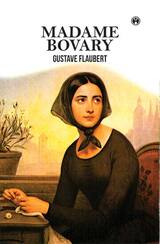
- Madame Bovary, Gustave Flaubert, The Film (2000)(DVD)
- Read: Madame Bovary
- Watch This Masterpiece Take on Flaubert’s Greatest Hit, “Madame Bovary” and “Gemma Bovary.
- Read Lilies of The Field
- Read To Kill a Mockingbird (Take the Quiz)
- Read The Story of My Life
- Read A Good Man Is Hard to Find
- Read: I Want A Wife
- A DAY WITHOUT A MEXICAN- WILL BE REALITY IN AMERICA SOON
.

DONATE
- Read: Diary of Anne Frank
- Read The Gift of the Magi
- Read Chekov: The Student
- Read Oscar Wilde: The Nightingale and the Rose
- Read The Sound and the Fury (For a Comprehensive Understanding of Classic Literature)
- Read What Will Happen to America to Intellectuals and Writers
- Read Madame Bovary
- Read The Girth with a Pearl Earring
- Read I Know Why the Caged Bird Sings
- Read The Pearl: Steinbeck’s Word of Cautionary Tales and Human Struggles is Timeless and Profound.
- Watch: “Vicky, Christina, Barcelona” to Understand Human Nature
- Watch Spanish Director Almadovoar’s Depiction of the Human Condition in “All About My Mother.”
- Read The Man Who Married Himself by Charlie Fish
- Read The Match-Maker by Saki
- Read The Open Window by Saki (With Analysis)
- Read Naguib Mahfouz: The Answer Is No
- I Know Why The Caged Bird Sings, Maya Angelo
- The Talking Horse by Sabri Bebawi
Insights from Naguib Mahfouz
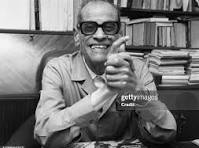
Naguib Mahfouz powerfully depicted the norms of Egyptian society, delving into the constraints and struggles individuals face. Growing up in Egypt, Mahfouz’s homeland, I have always admired his courage in honestly portraying society through authentic storytelling and profound characters. His work inspires me to seek truth in my writings, striving to capture the essence of our shared humanity.
I was honored to meet Naguib Mahfouz at the Nile Sheraton Hotel. in Cairo, Egypt. As he sat reflecting over a drink, I gathered the courage to approach him. After shaking his hand, I expressed how much I admired his work and my gratitude for his immense contributions to literature.
Tragically, Mahfouz faced several assassination attempts during his lifetime—proof that the truths he revealed often unsettled people. Yet, his works remain timeless, offering profound insights into the complexities of society and human nature.
Watch “Midaq Alley,” a 1995 Mexican film adapted from the novel by Egyptian writer Naguib Mahfouz, written by Vicente Leñero, and directed by Jorge Fons.
Maya Angelou 
The Great Maya Angelou, a legendary American poet, memoirist, and civil rights activist, She was renowned for her powerful words and her resilience in the face of adversity. I had the honor of meeting Maya at a function at the University where I used to work.
Maya Angelou was a great orator; when she spoke, the earth listened. She was among the most outstanding speakers of the time. I Know Why the Caged Bird Sings (1969) is the first and most famous of her works. The book recounts her early life, including her experiences with racism, sexual abuse, and the struggle to find her voice as a young Black woman in America.
The work became a classic of American literature, breaking new ground in addressing personal trauma and identity with such raw honesty.
Shamefully, I Know Why the Caged Bird Sings is among the books banned in Florida and some other rogue States in the United States schools and libraries. This is part of a more significant effort to remove books from school libraries under House Bill 1069.
Her masterpiece, I Know Why The Caged Bird Sings, is an autobiography. The beauty of I Know Why the Caged Bird Sings lies in its raw honesty, lyrical prose, and powerful storytelling. Maya Angelou takes the reader through her childhood and adolescence, capturing moments of deep pain, joy, and self-discovery with poetic elegance. She transforms personal struggles—racism, trauma, abandonment, and identity—into a universal story of resilience and triumph. Her language is rich and accessible, painting vivid portraits of the people and places that shaped her.
Every sentence carries weight, whether filled with sorrow, hope, or humor. The title’s significance comes from Paul Laurence Dunbar’s poem “Sympathy,” which describes a caged bird that sings not out of joy but as an expression of its deep longing for freedom. In the memoir, Maya Angelou, like the caged bird, experiences oppression and confinement—both socially as a Black girl in the racist American South and personally through trauma and silence. Yet, like the bird, she finds her voice through literature, poetry, and storytelling, ultimately breaking free from the metaphorical cage. The title reflects the suffering and the unbreakable spirit of those who continue to dream and sing despite their circumstances. READ THE BOOK
***********************************************************************
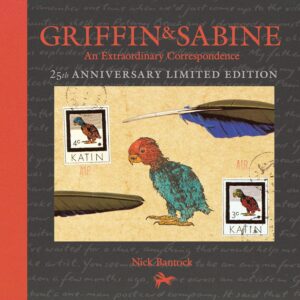
GRIFFEN & SABINE
Beloved by millions worldwide, Griffin & Sabine redefines the art of the novel. With its combination of lush illustration, creative storytelling, and the guilty pleasure of reading other people’s correspondence, Griffin & Sabine is part romance, mystery, and ultimately a work of art. Each turn of the page contains a new card or letter to be unfolded from its envelope and is vibrant with wildly imaginative creatures, landscapes, and intrigue. Destined to become a collector’s volume, this limited 25th anniversary edition contains new artwork, an original postcard, and specially created decorative stamps, making this book rewarding to enjoy all over again—or to discover for the first time.

******************************************************
PHILOSOPHY,
THE MOTHER OF ALL SCIENCES
THe_power_of_myth_joseph_campbell
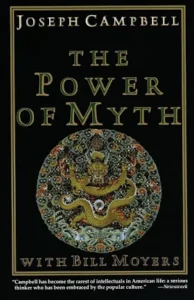
Philosophy studies fundamental questions about existence, knowledge, morality, reason, and the nature of reality. It encourages individuals to analyze concepts, challenge assumptions, and seek deeper understanding through logical reasoning and structured argumentation. Philosophy is essential in developing critical thinking skills because it teaches individuals how to evaluate evidence, identify biases, and construct well-reasoned arguments. People learn to question prevailing beliefs, consider multiple perspectives, and make informed decisions by engaging with philosophical ideas. This ability to think critically is crucial in all areas of life, from personal decision-making to solving complex societal problems.
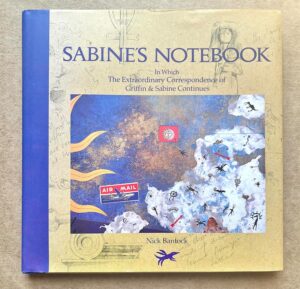
As with all literature, the story below, Tales of the Unexpected, and the Griffin & Sabine trilogy are examples of this, as they study human nature, knowledge of morality, and the nature of the reality of the human condition. The reader’s perception of the story helps identify biases and construct well-reasoned arguments. People learn to question prevailing beliefs, consider multiple perspectives, and make informed decisions by engaging with philosophical ideas. This ability to think critically is crucial in all areas of life, from personal decision-making to solving complex societal problems.
DONATE

Tales of the Unexpected

By Sabri Bebawi – Edited: ChatGPT
In the small, picturesque town of Willowbrook, a boy named Daniel met a girl named Lily on a sun-drenched afternoon in June. The moment their eyes met across the bustling farmer’s market, something magical sparked between them. Daniel, with his messy brown hair and warm hazel eyes, felt an immediate connection to Lily, whose bright smile and sparkling blue eyes made his heart race.
As summer unfolded, their bond grew more assertive. They spent countless hours wandering through the meadows, discussing their dreams and aspirations. Their love blossomed quickly, and soon, they became inseparable. The townspeople often remarked on how perfect they seemed for each other.
One evening, as the sun set over the rolling hills, Daniel and Lily lay on a blanket, gazing at the stars. Daniel turned to Lily and took her hand in his. “Lily, I love you more than words can say. Will you marry me?” Lily’s eyes filled with tears of joy. “Yes, Daniel, I will.”
They set their wedding date for the following spring, choosing a date that held special significance for both—the anniversary of their first meeting. Excitement and happiness filled their days as they planned their future together.
However, as the wedding day approached, an unease settled over Lily’s mother, Margaret. She had always supported her daughter’s relationship with Daniel, but a dark secret had haunted her for years. Unable to bear the weight longer, she decided to tell the truth.
One rainy afternoon, Margaret asked Lily to sit with her in their cozy kitchen. The smell of freshly baked cookies filled the air, but Margaret’s expression was grave.
“Lily, there’s something I need to tell you,” Margaret began, trembling. “It’s about Daniel.”
Lily looked at her mother, confusion and concern written on her face. “What is it, Mom?”
Margaret took a deep breath, tears welling up in her eyes. “When I was young, I had a brief relationship with a man named Michael. It ended before I met your father, but I recently discovered that Michael is Daniel’s father. Lily, Daniel is your half-brother.”
The words hung in the air, heavy and suffocating. Lily felt as if the ground had been pulled out from under her. She stood up, her heart pounding in her chest. “No, that can’t be true. There must be some mistake.”
Margaret reached out to her daughter, tears streaming down her face. “I’m so sorry, Lily. I never wanted this to happen. I never knew about Daniel until recently.”
Lily ran out of the house, her mind spinning. She found Daniel at their favorite spot by the river and tearfully told him what her mother had said. Daniel was equally devastated. The love they shared, so pure and true, was now tainted by a cruel twist of fate.
The days that followed were filled with pain and confusion. Daniel and Lily, once so sure of their future together, now faced an impossible reality. They knew they couldn’t be together despite their love.
In the end, they made the heartbreaking decision to part ways. They vowed always to cherish the memories of their time together and to support each other as siblings. The love they shared would never fade, but it would have to take on a different form.
Life in Willowbrook continued, but Daniel and Lily would never be the same. They carried the weight of their lost love with them, finding solace in the knowledge that, despite everything, they had once shared something beautiful.

Lesson 11: Common Writing Problems
For this assignment, you must read the Supplementary Material links “Bonus Material 1: Clarifying Prepositions of Time and Place” and “More on Prepositions.” So, read these links first before attempting this assignment!
This exercise will make you more aware of the prepositions that occur with common verb and adjective phrases. First, read my short story, titled “The Talking Horse.” After the story, you will find a list of the prepositions and then some fill-in-the-blank sentences about the characters in the story. You must select the preposition that goes with the verb or adjective phrase.
Good luck!
The Talking Horse

A Short Story, by Sabri Bebawi © UCLA
When his father died, Joy’s mom remarried. Joy’s new stepfather did not want him around, so he persuaded his wife to send Joy to the village to live with the husband’s sister. “Your son will be well taken care of in my sister’s house,” the husband assured his new wife. Reluctantly, Joy’s mother agreed, and Joy was sent to the village. Joy’s stepfather drove to his sister’s farm in the town to drop Joy off. Joy’s new guardian was a middle-aged, five-foot-tall woman who looked mean and unkind. She had a booming voice and used vulgar, impolite, crude language Joy was not used to hearing. She dressed in black and covered her head with a scarf that allowed locks of gray hair to hang from beneath it.
“My name is Louva; you call me Aunt Louva, little boy,” said she to Joy, who felt uneasy around her. Joy, standing in front of Louva and looking up at her, could see her badly stained, chipped front teeth and could smell her bad breath.
“God! She is ugly,” he thought. “Yes madam—I mean Aunt Louva.”
Joy was then led to his room. It was a tiny and dirty room with a tiny window looking at the stable where Louva kept a horse named Joshua. The room had a small mattress on the floor, one small pillow, and a very dirty cover. “This is where you will sleep,” yelled Louva in her screechy voice.
Every day at dawn, Louva would wake Joy up and have him do the house chores. He would wash the floor, clean up the kitchen, sweep the outside of the house, and clean the stable. While in the stable, Joy would talk with Joshua, the horse, and would complain about Louva’s treatment. Over time, Joy became attached to Joshua and so did Joshua to Joy. Many cold afternoons, Louva, Joy, and Joshua would go into the woods to collect wood for the fireplace and for the cooking stove. Louva would hit Joshua hard and yell, “Move, you lazy horse, move.” One time Joy asked Aunt Louva not to hit Joshua. Consequently, Joy was spanked several times on the buttocks hard and told to mind his business. While Louva was not watching, Joy whispered in Joshua’s ear, “Don’t worry, Joshua; don’t worry; she is crazy.” Joshua shook his head up and down as though he understood and agreed.
Every night, Joy would lie on the dirty mattress on the floor shivering from cold; he would think of home, miss his mother, and weep. Sometimes his crying and weeping could be heard from outside. At times, Joy would hear Joshua’s whinnies coming from the stable beneath his window.
One night Joy heard a voice beneath his window calling his name, “Joyeeee . . .” He rushed to the window and looked down but saw no one there except Joshua. Astonished, Joy climbed out the window and approached Joshua, who greeted him warmly. A moment or two passed, and Joy realized that Joshua was actually talking to him. After the initial shock, Joy was very happy, and ever since they would meet and talk every night.
Louva felt that there was something going on between Joy and Joshua. She could hear some voices at night, and she asked Joy several times about these voices. Joy would tell his aunt that she was imagining things. One night, Aunt Louva stayed awake just to investigate these voices. She thought she was hallucinating when she saw Joy and Joshua actually talking to each other. She decided that Joy was possessed by a demon and that he should be locked up.
The next morning, just before dawn, Joy was awakened by a loud noise. As he opened his eyes, he noticed the room was too dark and heard heavy knocking on the window. Louva was boarding up the window; she covered the window with wooden bars to prevent Joy from getting out. Joy jumped out of bed and ran toward the door but discovered that the door was locked. He realized that he was locked in like a prisoner. He cried continuously. He remained imprisoned for days and nights. His Aunt Louva would open the door, leave small pieces of bread and sometimes some pasta and water on the floor, exit, and lock the door.
For several nights, Joy would hear Joshua beneath the window, whispering words of encouragement to him. One night, Joy heard scratches at his window. He wondered but made nothing of it. Another night, he heard the same noises, so he came close to the window and saw Joshua pulling the nails out of the wooden bars with his teeth. He was surprised and pleased; he was full of hope that he would be free. After some struggle, Joshua could remove all the wooden bars from the window and, in joy, forgot himself and gave a loud whinny. Aunt Louva heard the noise and came out with a shotgun. Joshua saw her coming; he called Joy to jump from the window. Joy did and fell to the ground. Joy saw Joshua running toward Aunt Louva, and as he approached her, he turned around. He kicked her so hard with his hind legs that she flew far away and was no longer seen. Joshua ran back toward Joy, neighed excitedly, and told him he would take him home. Joy climbed on Joshua’s back, and through the wind, Joshua raced away from the farm.
Prepositions: about, around, at, between, by, in, of, to
Now, on a sheet of paper, write down how you would fill in the blanks. To view the answer, place your mouse pointer over the blank.
1. In this story, Joy’s mother remarried, and the new stepfather didn’t care ________ him.
2. He convinced his wife that her son would be well taken care ________ in his sister’s house.
3. Joy’s mother reluctantly agreed ________ let her son go to the sister’s house.
4. The sister, Louva, was vulgar, stinky, and ugly. Joy did not feel comfortable ________ her.
5. Louva yelled ________ Joy, shouting ________ a shrill voice.
6. Whenever Joy was working in the stable, he would complain ________ Louva’s cruel treatment.
7. Gradually, Joy and Joshua became attached ________ each other. There was a special feeling ________ them.
8. When Louva was mean to Joshua, Joy told the horse not to worry ________ it because the woman was crazy.
9. Joy was astonished ________ the horse when he actually spoke ________ him.
10. Louva suspected something was going on ________ Joy and Joshua.
11. When Louva continued to hear the two of them talking ________ each other, she thought Joy was possessed ________ a demon and locked him up.
12. Joshua was very excited ________ racing away from the farm with Joy on his back.
Answers
1. In this story, Joy’s mother remarried, and the new stepfather didn’t care ____ him. about
2. He convinced his wife that her son would be well taken care ____ in his sister’s house. : of
3. Joy’s mother reluctantly agreed that ____ let her son go to the sister’s house. to
4. The sister, Louva, was vulgar, stinky, and ugly. Joy did not feel comfortable ____ her. around
5. Louva yelled ____ Joy, shouting ____ a shrill voice. Answer: at, in
6. Whenever Joy worked in the stable, he would complain ____ Louva’s cruel treatment. about
7. Gradually, Joy and Joshua became attached ____ each other. There was a special feeling ____ them. : to, between
8. When Louva was mean to Joshua, Joy told the horse not to worry ____ it because the woman was crazy. about
9. Joy was astonished ____ the horse when he spoke ____ him. Answer: By, to
10. Louva suspected something was going on____ Joy and Joshua. : between
11. When Louva continued to hear the two of them talking ____ each other, she thought Joy possessed ____ a demon and locked him up by
12. Joshua was very excited ____ racing away from the farm with Joy on his… about